SONOMA CHEESE FACTORY
Seven Moves That Could Change Your Business
A strategy memo for Sonoma Cheese Factory, Sonoma Plaza
Peter Huson
phuson006@gmail.com
415-271-8240
Use the buttons, arrow keys, or swipe. Pages may scroll naturally if text continues below the fold.
Peter Huson
phuson006@gmail.com
415-271-8240
You are sitting on more value than your dining room reflects. You have a kitchen that produces things people love, a historic location steps from the Sonoma Mission, a food truck, and three properties across two of California's most desirable destinations. What you don't yet have is a system for turning all of that into repeat business, recurring revenue, and a steady stream of strangers who arrive already wanting to be here.
Right now, most of your guests are one-time transactions. They have a wonderful meal and then they disappear, and you have no way to reach them again. Meanwhile, the people who could send you customers by the busload - wineries, tour operators, concierges - don't yet know you exist, or don't yet have a reason to point in your direction. The seven efforts below fix both problems. They are not seven separate chores. They are one connected machine: you build an audience you own, you turn your products into wholesale revenue inside the wine economy, and you plug yourself into the referral network that already moves thousands of visitors through Sonoma every week.
The single most expensive mistake a restaurant makes is letting a happy customer leave without a way to reach them again. You already paid to acquire that person - through your rent, your reputation, your food, the meal they just enjoyed. The cost of getting them back is essentially zero if you have their email. The cost of finding a brand-new customer to replace them is high and never stops. An email list is the only marketing asset you truly own; it appreciates over time and no algorithm can take it away from you. Your Instagram followers belong to Instagram. Your Google ranking belongs to Google. Your email list belongs to you.
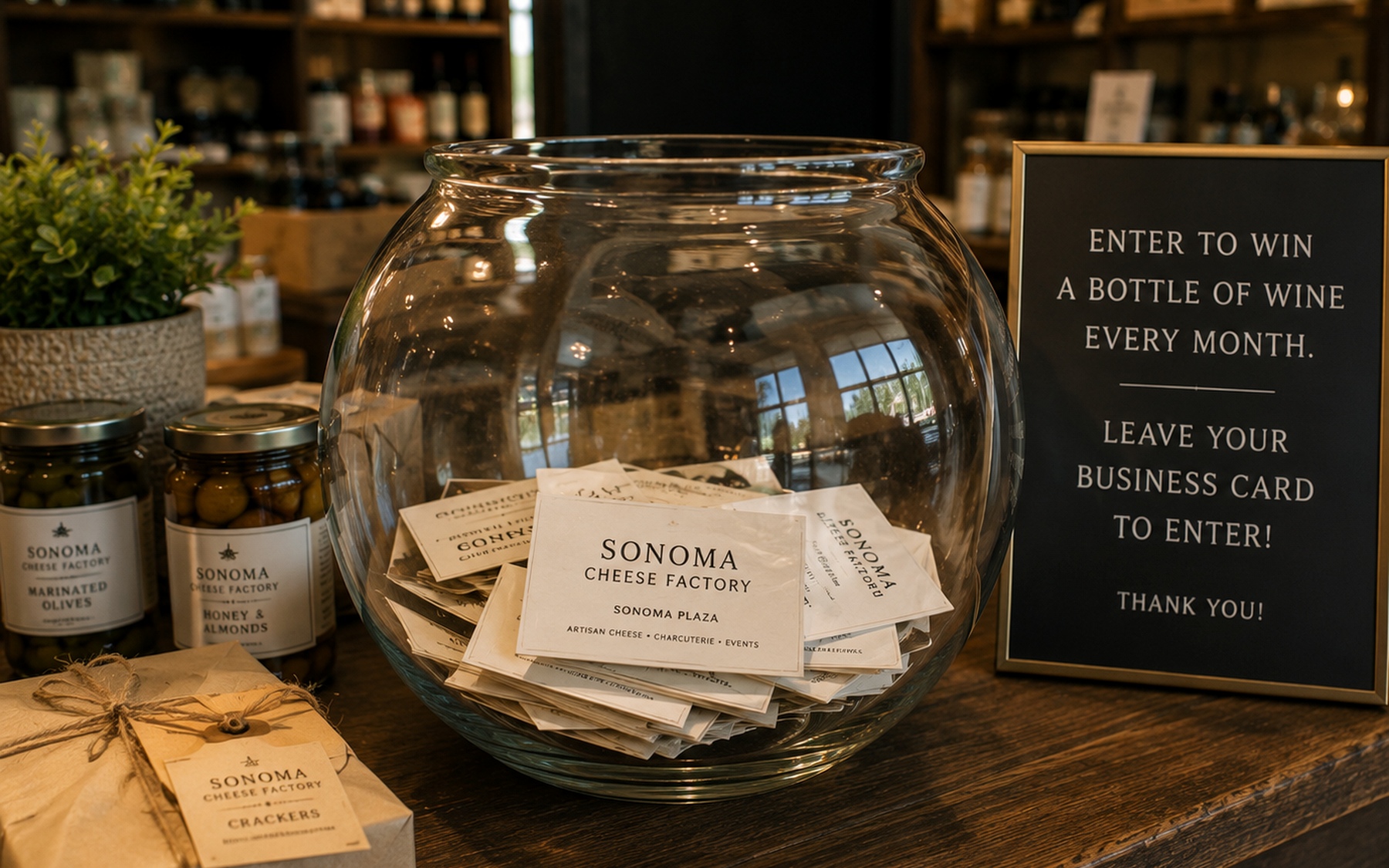
The trick is that people resist handing over an email when they sense it leads to spam, but they happily drop a business card to win something. So reframe the ask as a reward. A fishbowl at the host stand or a card on every check: “Drop your card - each month we give away a bottle signed by the winemaker,” or “Join the list and stay ahead of our ever-changing menu and events.” A QR code printed on the bill takes ten seconds for a guest to scan. If your servers simply mention it, and you collect even five contacts a night, that is roughly 1,800 new people a year you can reach for free, on demand, forever. That list is the foundation everything else in this memo is built on.
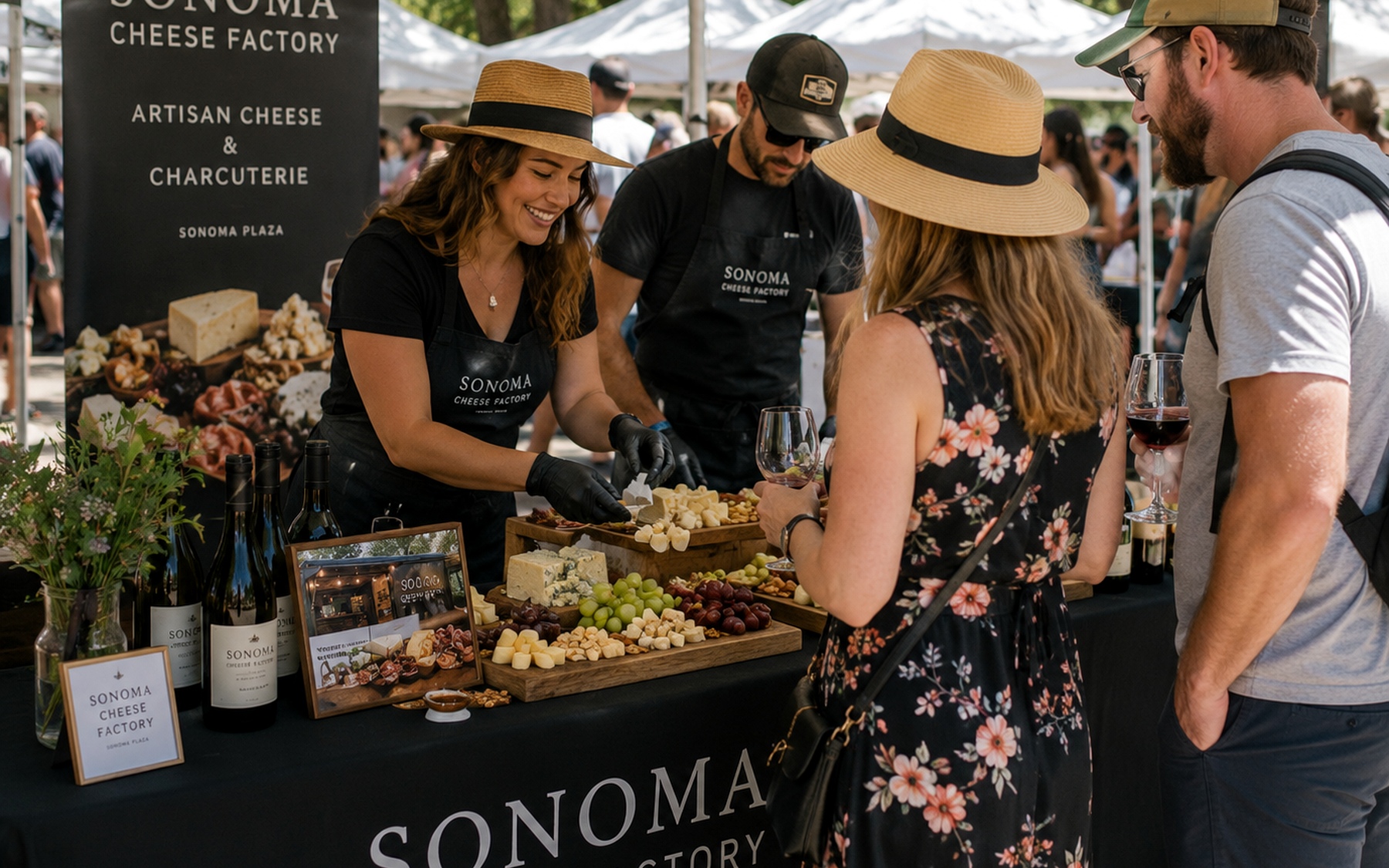
Events put you in front of large groups of exactly the right people: visitors and locals who showed up because they care about food and wine. There is no more efficient way to meet your future customers all at once. And when you serve at an event, you bypass every form of advertising, because taste sells better than any photo or caption ever could. A person who tries your charcuterie at a harvest festival doesn't have to be convinced to try your restaurant - they already have.
Events do something else just as valuable: they are where you meet the trade. The winery owners, event planners, tour operators, and fellow operators who can become partners are all in the room. Sonoma's calendar is dense with these opportunities year-round - release parties, crush and harvest events, farmers markets, charity galas, and tasting-room celebrations. Being present, repeatedly, builds the familiarity that referral partners need before they'll ever recommend you. And of course, you bring the fishbowl. Every event is another night of collecting contacts, except now you're collecting them from people who don't even live nearby and might never have found you otherwise.
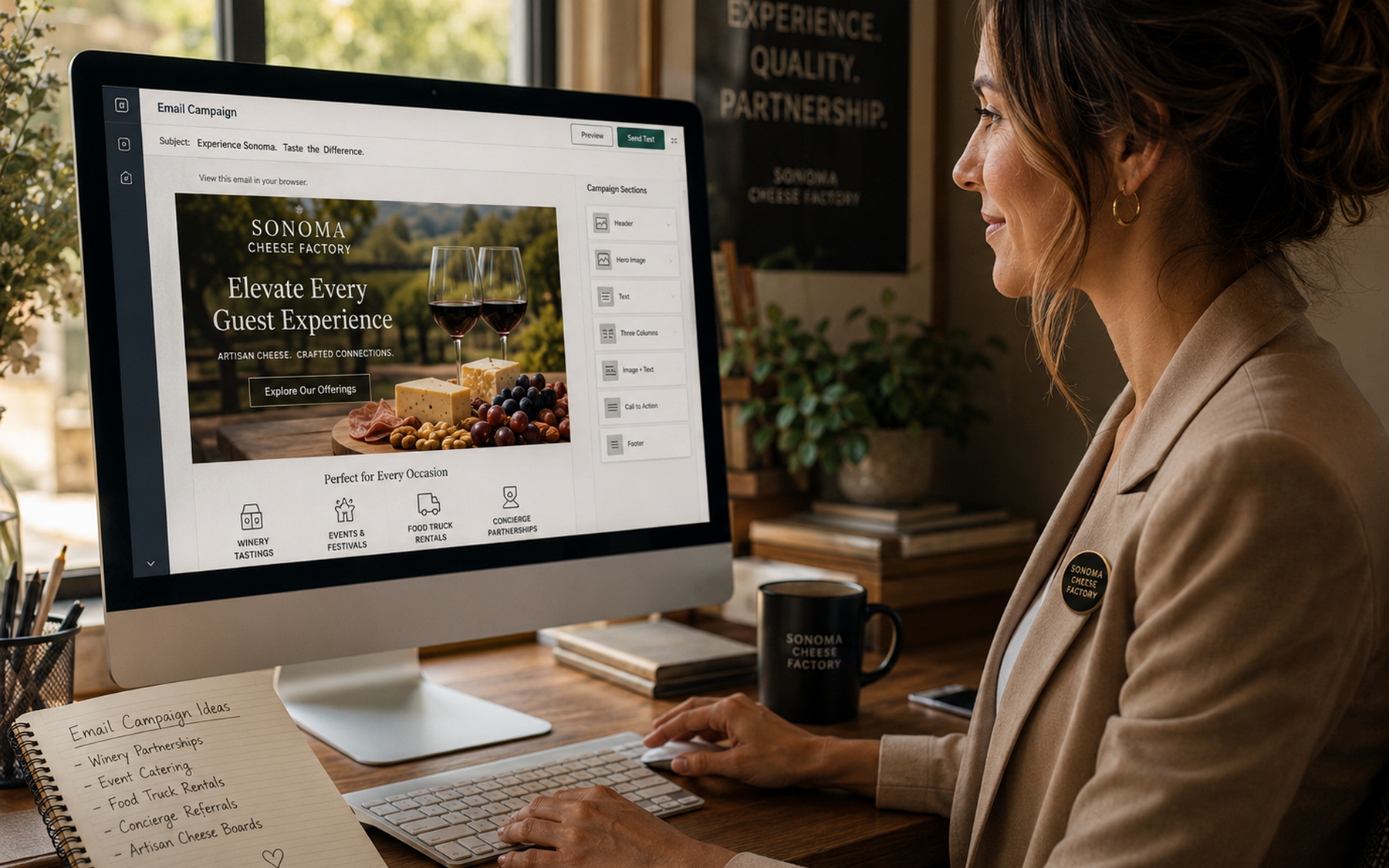
Efforts 1 and 2 are pointless without this one. A pile of business cards in a drawer does nothing; a list connected to an email platform is a channel you can fire whenever you choose. Email remains the highest-return marketing channel in hospitality precisely because it is owned, direct, and lands in front of people who already like you. Mailchimp and Constant Contact both make this nearly effortless - they handle the design, the sending, the unsubscribes, and the legal compliance for a modest monthly cost.
A monthly note does three jobs at once. First, it keeps you top of mind so guests come back before they drift to the next new place. Second, it cross-promotes your other properties - the guest who loves your Sonoma room should know about Cloverdale and Lake Tahoe, so that one customer becomes a customer in three locations and a referral source when their friends travel. Third, and least obvious, the newsletter is your business-development tool. Once wineries, concierges, and tour operators are on the list, every issue keeps you in front of them between asks, with no awkward cold outreach required. The content writes itself: the seasonal menu, a winemaker collaboration, where you'll be appearing this month, and the cheese and charcuterie boards you now offer to the trade.
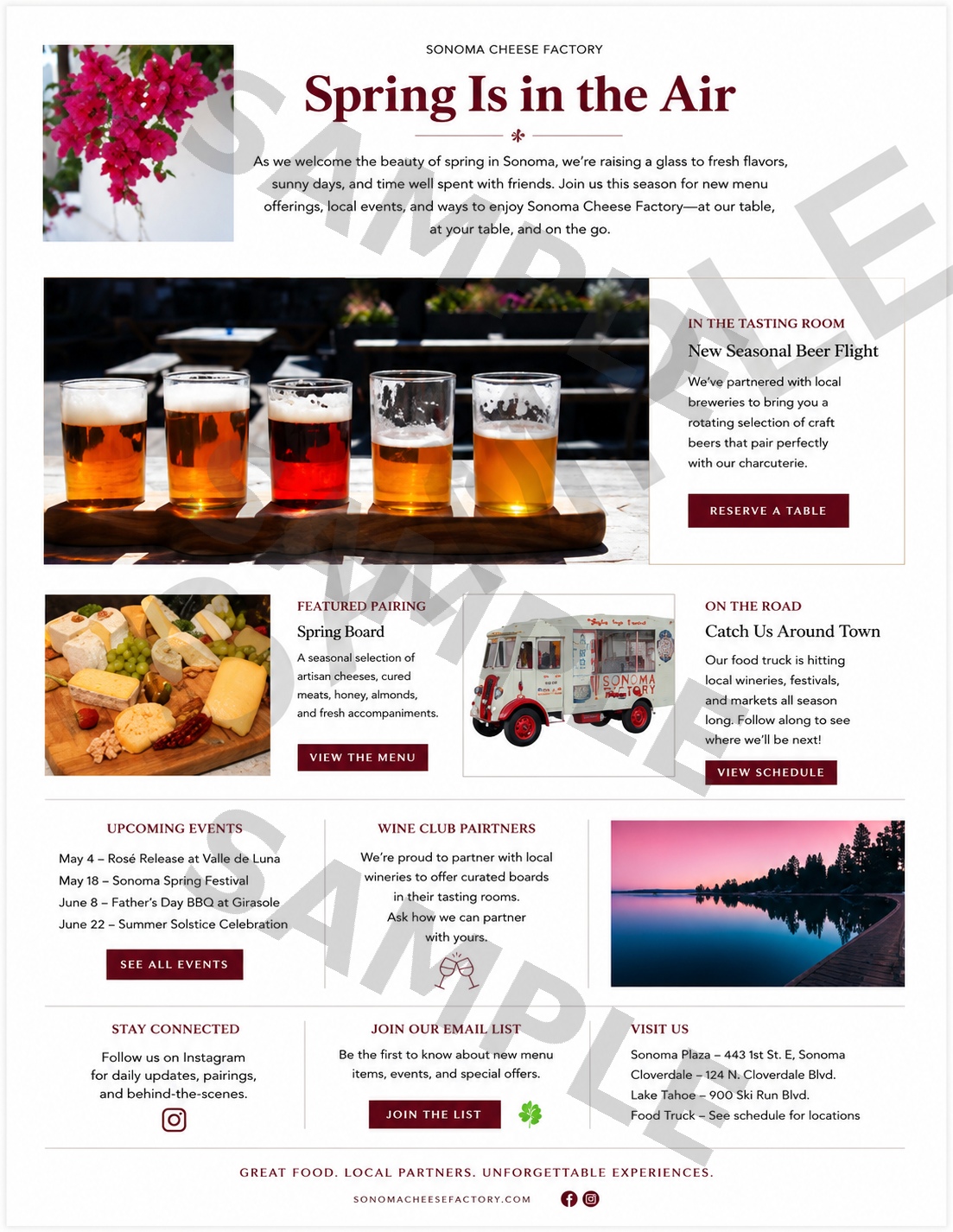
This sample newsletter is embedded as part of the booklet with a light SAMPLE watermark. It demonstrates how seasonal food, events, wine club messaging, food truck updates, special offers, and partner promotions can live together in one recurring communication.
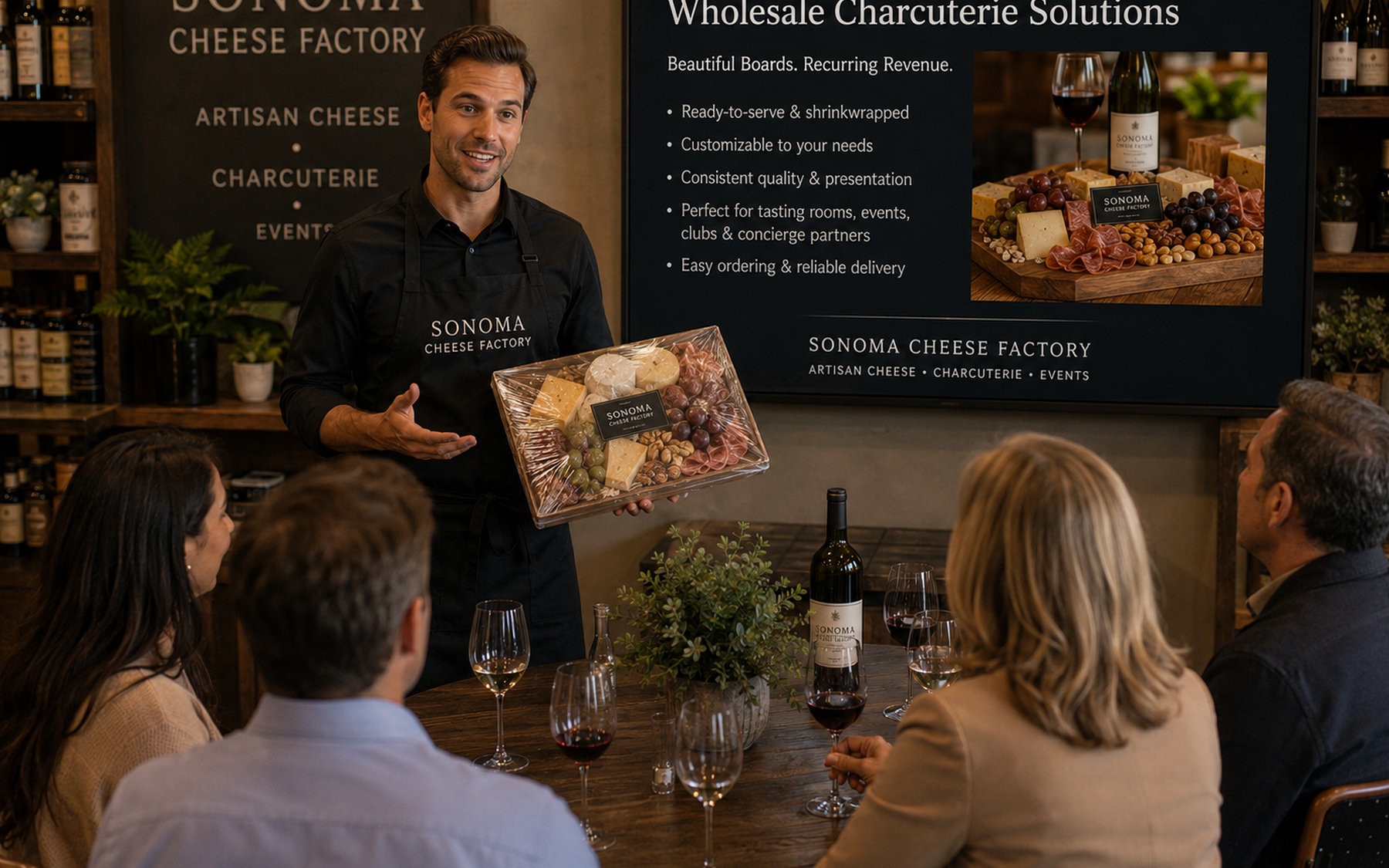
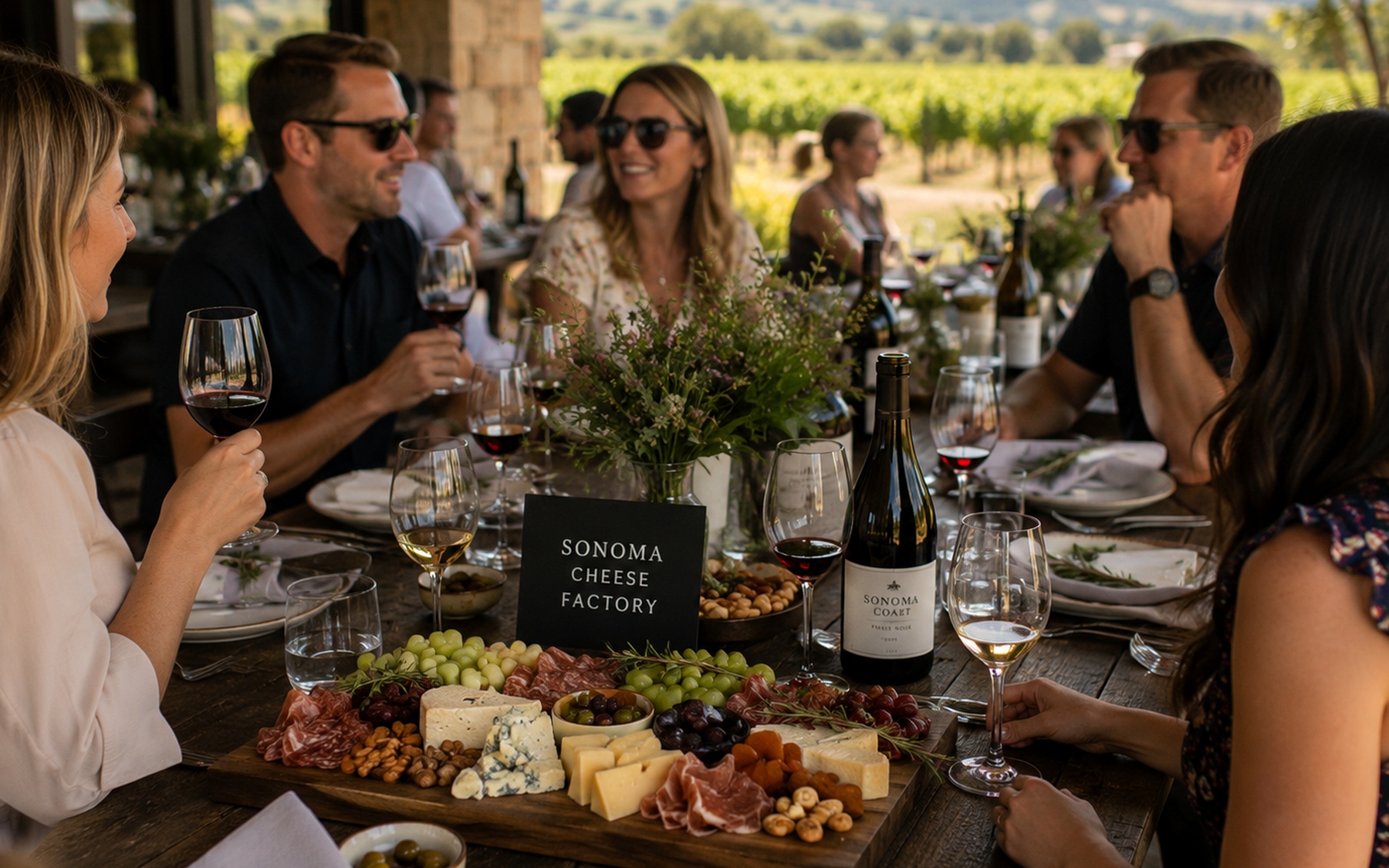
Tasting rooms have a structural problem you can solve. Pouring wine to guests on an empty stomach is bad for the guest and bad for sales - but most tasting rooms have no kitchen and no desire to run one. They know that food keeps guests in their seats longer and that longer visits mean more bottles sold and more wine club sign-ups. A beautiful, ready-made board delivered to their door solves all of that for them with zero labor on their side. You are not asking them for a favor; you are handing them more revenue.
For you, this is recurring wholesale income layered on top of your dining room - a far steadier business than waiting for covers to walk in. The margins on a well-built board are excellent, and every board you place puts your name inside another tasting room, in front of an affluent, wine-buying audience, presented on a surface practically built for the photos those guests will post. You become an advertisement that the winery pays you to display. Approach a handful of tasting rooms to start, let the boards prove themselves, and let word travel - tasting-room managers all know one another.
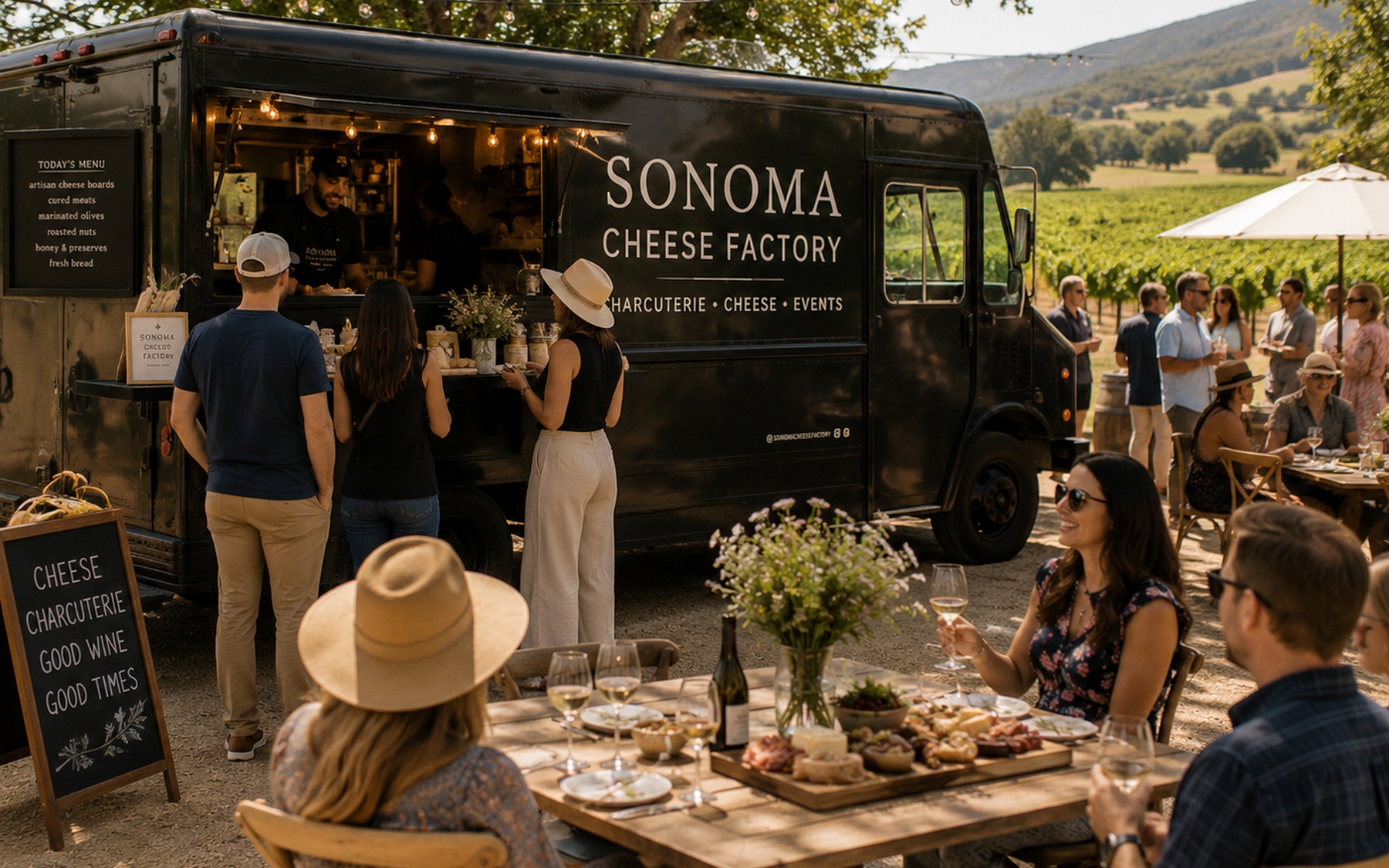
Wineries are constantly hosting - club pickup weekends, release parties, harvest celebrations, weddings on the crush pad. Every one of those events needs food, and almost none of these wineries want to deal with the logistics of a kitchen or a full catering company. A turnkey food truck that simply shows up is the easy yes. It is the lowest-friction way for them to feed a crowd, and it makes their event feel like an occasion.
For you, each rental is a high-value day, not a string of small checks - and it parks your brand directly in front of the exact wine-country audience you most want to reach. It is also the natural front door to a deeper winery relationship: the winery that books your truck this month is the winery that orders your boards next month. As you noted yourself, the newsletter is the way in. Feature the truck in an issue, let interested wineries raise their hands, and you've turned a marketing channel into a booking engine without making a single cold call.
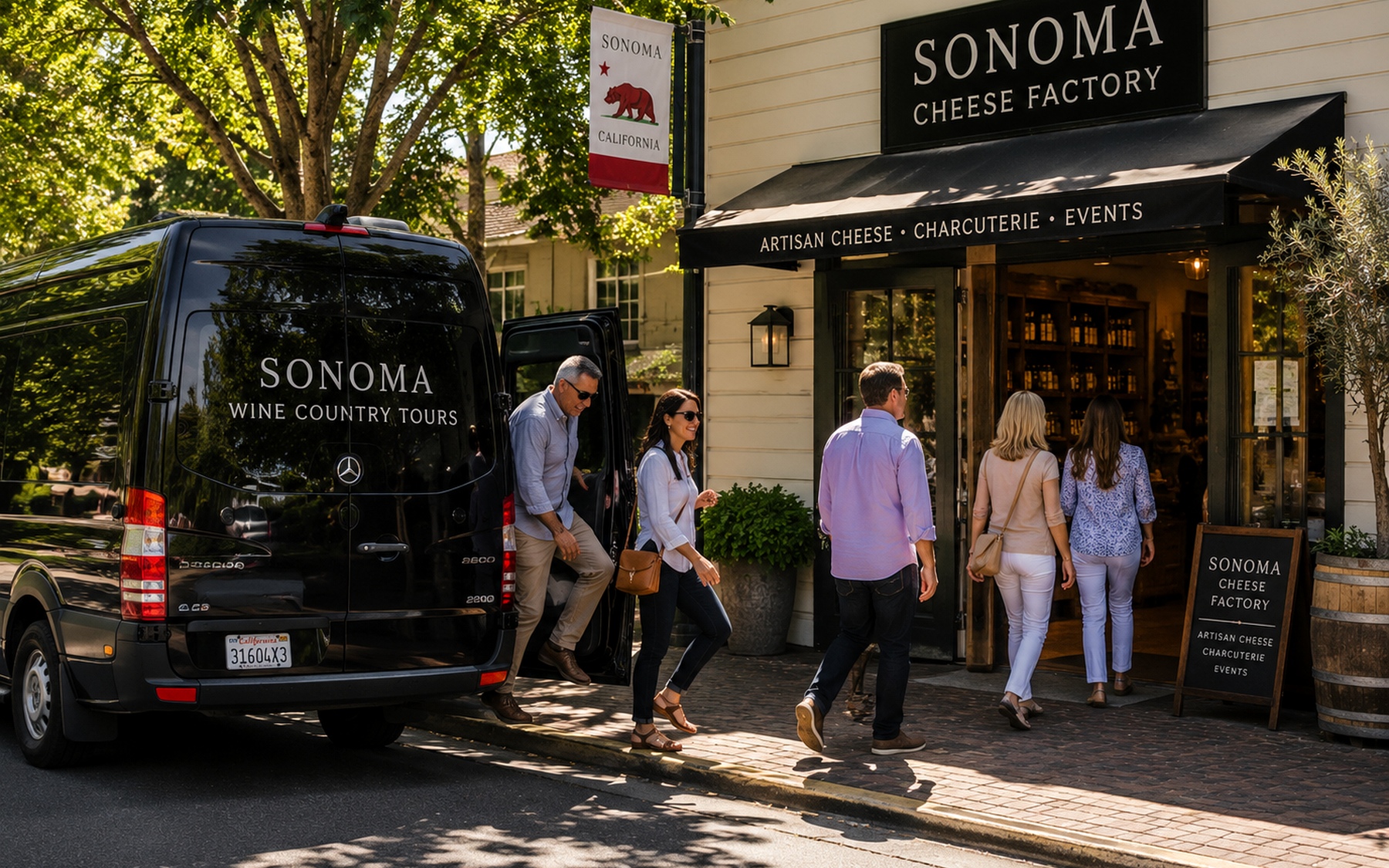
Limo companies, wine tour vans, and active-tour operators move thousands of visitors through Sonoma, and those visitors are spending freely and actively looking to be told where to go. They are the easiest customers in the world to win, because someone else has already done the work of getting them into the car. Your building is precisely the kind of anchor a tour wants on its itinerary - a historic property beside the Sonoma Mission, on the Plaza, with a story and a meal break built in. A designated stop means pre-qualified foot traffic delivered to your door, frequently in groups, which lifts the average check.
The people to win over are the drivers and operators themselves, because they are the gatekeepers who decide the route. They will happily steer guests toward a restaurant that takes care of them and makes them look good - a simple referral arrangement, a comfortable spot to wait, a comp for the driver. This is, in effect, customer acquisition you outsource to people who are already on the road every single day. Add the operators to your newsletter list and they'll never forget you're an option.
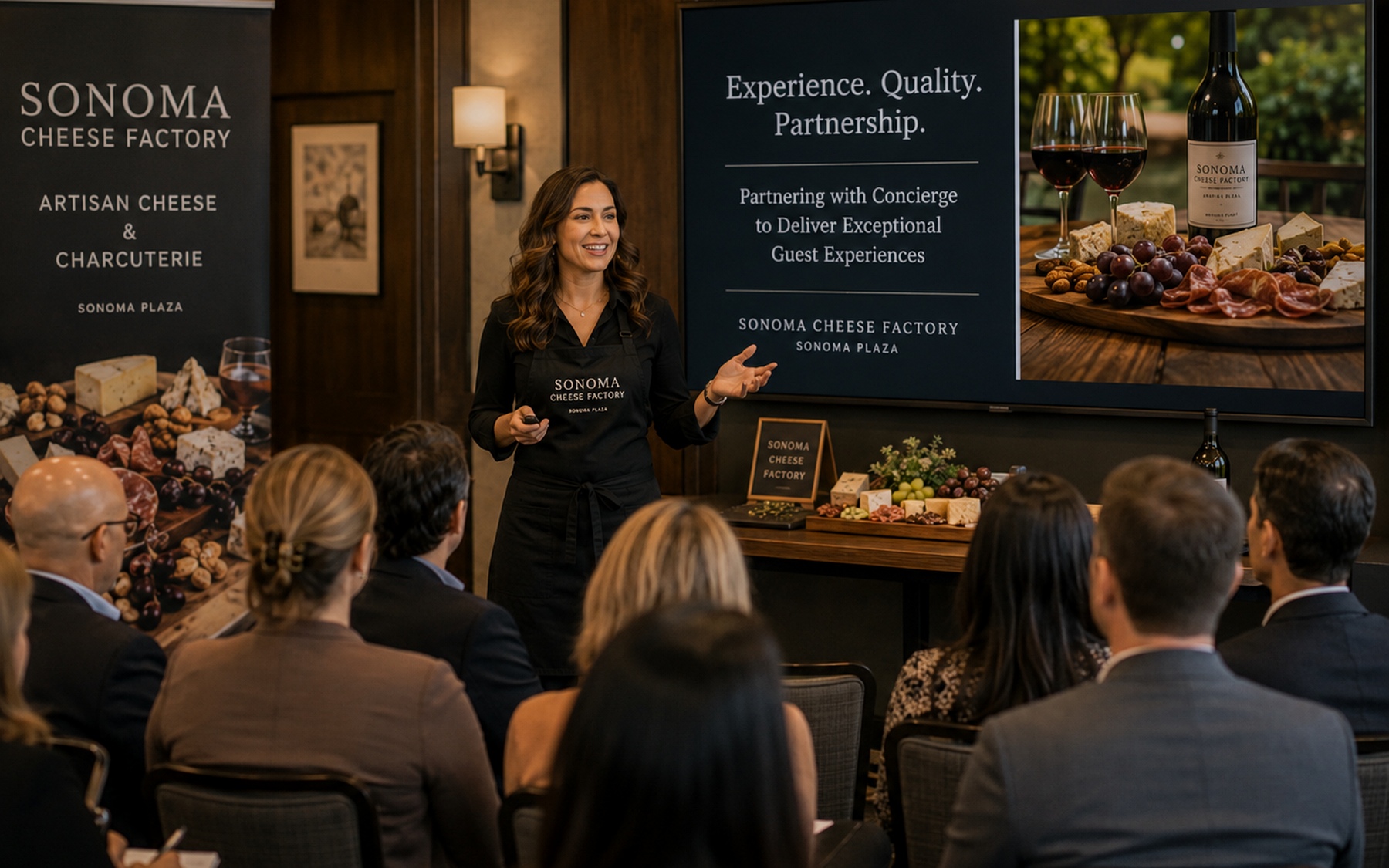
A concierge's recommendation is the highest-trust referral in all of hospitality. When a guest asks the front desk “where should we have dinner tonight?”, they almost always go where they're told - and a good concierge answers that question dozens of times a week. Getting onto a concierge's short list means a steady, year-round stream of high-intent guests, often the ones willing to spend more because they're on vacation and the trusted local insider sent them to you.
Concierges work at hotels, inns, and the growing world of luxury vacation rentals, and many belong to formal networks where reaching one can mean reaching many. They reward the restaurants that make their jobs easy and make them look good to their guests: hold a few tables for last-minute concierge requests, hand them a clean one-page sheet they can give out, invite them in for a tasting so they can recommend from genuine experience. Concierge associations let you build these relationships at scale rather than one desk at a time. As with everyone else on this list, a presence at events and a spot in your monthly newsletter is what turns a name on a card into a relationship that sends you business.
It's easy to read a list like this as seven separate to-do items and feel overwhelmed. Don't. These efforts are designed to feed one another. The contacts you collect in the dining room and at events become the audience for your newsletter. The newsletter is what reaches the wineries who buy your boards and rent your truck, and the tour operators and concierges who send you guests.
Every event you serve builds the familiarity those partners need before they'll refer you. Every board in a tasting room and every food-truck booking is also a piece of advertising and the start of a deeper relationship. Each move makes the next one easier, and together they turn a single dining room into a hub that pulls revenue from the entire Sonoma wine economy.
Where to start. You don't have to do all seven at once. Set up the email platform and the fishbowl first - that takes a week and immediately stops the bleeding of lost customers. Begin sending one newsletter a month, even a simple one. Then use that channel and your first few events to open the winery conversations for boards and truck rentals, which bring in real recurring money. The transportation and concierge relationships build steadily on top of everything else. Six months of consistency here will look like a different business than the one you're running today.
Peter Huson
phuson006@gmail.com
415-271-8240